- —Research on the health benefits of coastal living generally links time near water with lower stress, more physical activity, and better self-reported wellbeing.
- —'Blue mind' science describes the calm, restorative state many people report near oceans and other blue spaces.
- —Coastal life tends to encourage an outdoor lifestyle — walking, swimming, paddling, and time outside year-round in a warm climate.
- —These are general, population-level associations, not medical advice or guarantees for any individual.
- —SW Florida's Gulf coast offers warm water, calm beaches, and a long outdoor season that supports this kind of lifestyle.
The health benefits of coastal living are, broadly, what a growing body of research suggests: people who live near water tend to report lower stress, more physical activity, and higher overall wellbeing. That’s the honest, evidence-aware version — general patterns at the population level, not a medical promise for any one person. Below is what “blue mind” science, an outdoor-forward climate, and an active coastal routine actually appear to offer, paired with a clear-eyed look at the trade-offs and at why SW Florida’s Gulf coast lends itself to this kind of life. None of this is medical advice; talk to a professional about your own health.
”Blue mind”: why water tends to calm us
The phrase blue mind comes from work at the intersection of marine biology and psychology, and it names something most people intuitively recognize: a mildly meditative, restorative state that water seems to invite. Standing at the edge of a calm Gulf beach, the typical response is a slowing-down — slower breath, softer focus, lower felt stress.
Researchers studying “blue space” — oceans, bays, lakes — generally find that proximity and exposure to water are associated with better mood and lower stress. The proposed mechanisms are simple and human: water views are visually restorative, the soundscape is soothing, and being near water nudges us outdoors and into motion. As a framework, blue mind describes a general tendency rather than a precise clinical dose, but it’s a useful lens for why living near the ocean so often feels good.
Movement built into daily life
A second, more measurable thread in the research is activity. Coastal living wellness tends to ride on a quietly powerful mechanism: people who live near the coast generally move more. The beach is a free, flat, beautiful place to walk; the water invites swimming and paddling; bays and flats support kayaking and fishing; and warm mornings make cycling and golf easy to keep up.
That matters because consistent, moderate movement is one of the most reliably beneficial things for long-term health. When the environment makes activity the default — when a sunset walk or a morning swim is simply what you do — adherence takes care of itself. A Florida outdoor lifestyle isn’t about a gym membership you have to force; it’s about a setting that makes movement the path of least resistance. Families weighing the lifestyle often read this alongside which SW Florida Gulf-coast town fits your family.
Sunlight, sleep, and time outside
Two more commonly cited threads: light and rest. Regular morning daylight is generally associated with better circadian rhythm and sleep quality, and sun exposure supports the body’s vitamin D production. A long outdoor season means more days that begin or end outside, which tends to reinforce healthy sleep-wake patterns.
It’s worth being precise here. These are general associations, and sunlight in particular is a double-edged factor — the same sun that supports rhythm and mood also demands real protection. The benefit is in sensible time outdoors, not maximal exposure.
The practical version of this is mundane but real: a coastal routine tends to front-load and back-load the day outdoors — a morning walk or swim before the heat, an evening stroll as the sun drops — which happens to align well with the gentler light most experts favor. The middle of a Florida summer day is for shade and water, not exertion. People who live this way for years often describe a rhythm that feels natural rather than disciplined, precisely because the environment, not willpower, is doing the scheduling. That’s the quiet advantage a long outdoor season provides: it lets healthy patterns settle into habit.
A balanced look at the mechanisms
It helps to separate what’s robust from what’s softer. Here’s a general summary of how the commonly cited mechanisms tend to stack up — framed as general tendencies, not clinical guarantees:
| Mechanism | What research generally suggests | How coastal life supports it |
|---|---|---|
| Physical activity | Strong, consistent link to wellbeing | Beaches, water sports, year-round outdoor season |
| Stress reduction (“blue mind”) | Associated with lower stress, better mood | Water views, calm shorelines, restorative soundscape |
| Sleep & circadian rhythm | Morning light linked to better sleep | More daylight-hour outdoor time |
| Social connection | Linked to longevity and mood | Walkable beach towns, community life |
| Vitamin D / sunlight | Supports mood and bone health | Abundant sun (with protection) |
The throughline is that these mechanisms reinforce one another — and that the coast simply makes each one easier to access.
Social connection: the quietly powerful factor
Of all the threads researchers study, social connection may be the most underrated. Strong relationships and community involvement are consistently associated with longevity and better mental health, and walkable beach towns tend to foster exactly that kind of connection. When daily life includes a familiar morning beach walk, a neighborhood that runs into each other at the same handful of cafés and ramps, and a shared rhythm built around the water, the social fabric forms almost on its own.
This is a different mechanism from the physical ones, and it doesn’t show up on a fitness tracker — but it’s part of why people describe coastal communities as restorative beyond the scenery. Small, water-centered towns make casual connection the default rather than something you have to schedule. For families relocating, that ease of building community is often as valuable as the climate, and it’s a theme that runs through moving to Boca Grande with kids.
The honest trade-offs
A credible case for coastal living has to include the costs, because pretending otherwise would be greenwashing the lifestyle. The Gulf coast’s intense sun calls for daily sun protection. Summer heat and humidity require pacing and hydration. Coastal areas experience seasonal weather, and the region occasionally sees algae or red-tide conditions that affect some people more than others.
None of this cancels the general wellbeing benefits — but a balanced view is the only honest one. The practical takeaway: the upside is real and well-supported in general terms, and the downsides are manageable with normal precautions. As always, your own health circumstances should be discussed with a medical professional, not inferred from a population study.
Why the Gulf coast specifically
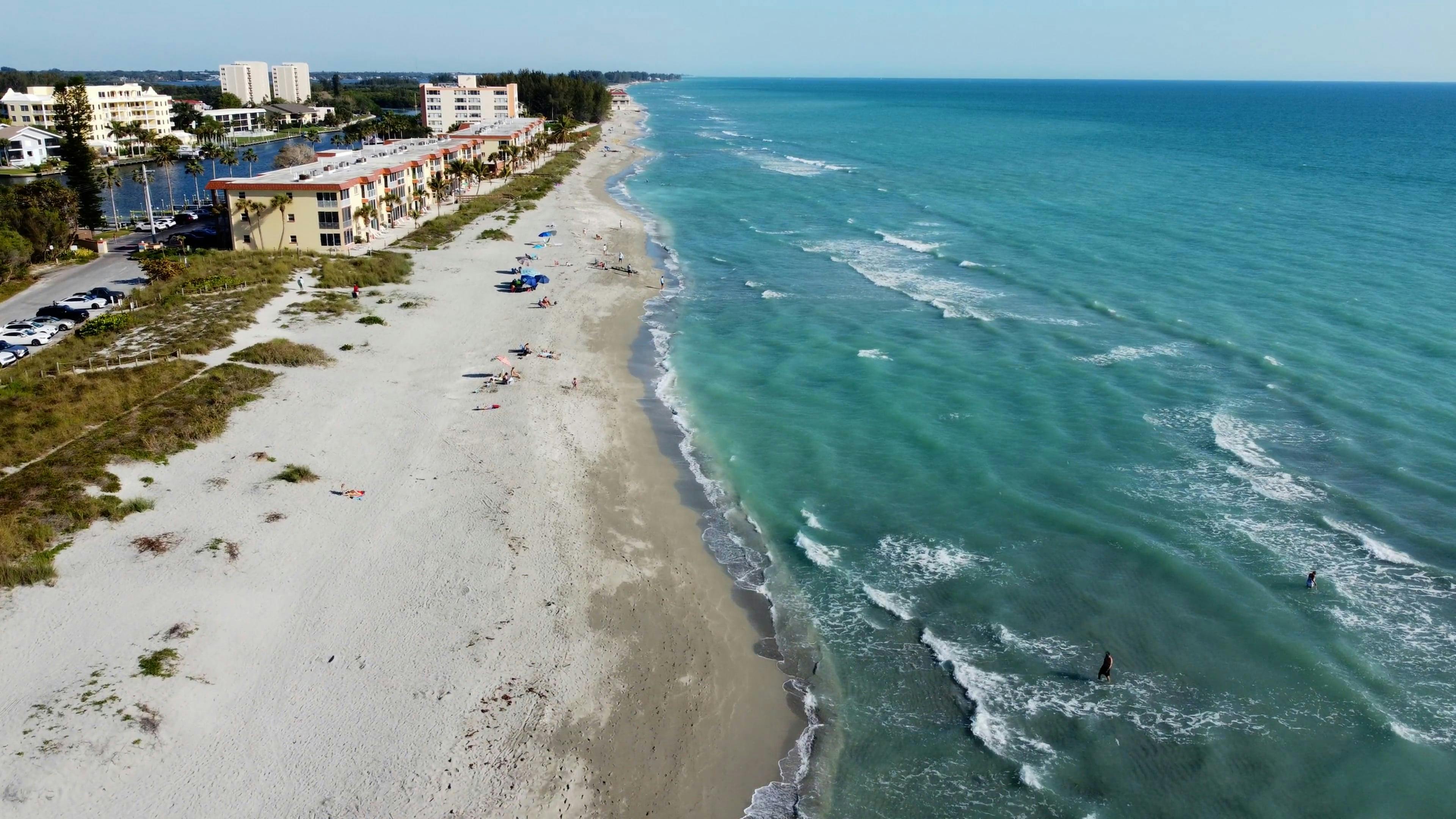
If the mechanisms above are the “why,” SW Florida’s Gulf coast is a strong “where.” The Gulf’s water is warm and the beaches are typically calm and gently sloped — ideal for swimming, wading, and unhurried walks. The outdoor season runs long, so movement-rich routines hold up across most of the calendar. And the region’s beach towns are walkable and community-oriented, which feeds the social-connection thread that researchers link to longevity.
You can feel this most clearly on the quieter barrier-island stretches, where the pace is slow and the water is the center of daily life — the kind of setting we describe in Englewood and Manasota Key beach living and across the wider Boca Grande area. For many buyers, the wellbeing case isn’t an abstraction; it’s the entire reason they’re moving. Bring your own version of that question to our questions page.
Designing a home and routine around the benefits
If the goal is to actually capture these general benefits rather than just admire the view, a few practical choices matter more than people expect — and they’re worth weighing as you evaluate homes.
- Proximity to the water you’ll use. A home a short walk from the beach or a paddle launch gets used daily; one a long drive away often doesn’t. The mechanism is frequency, and frequency is mostly about convenience.
- Outdoor living space. Covered porches, lanais, and shaded outdoor areas extend the hours you can comfortably spend outside through heat and sun, which keeps the outdoor-time mechanism alive year-round.
- Walkability. Being able to walk to a café, a ramp, or the sand turns activity and casual social connection into defaults rather than decisions.
- Light and orientation. Homes that capture morning light support the circadian-rhythm thread; western exposures reward the sunset-walk habit.
None of these are guarantees of any health outcome — they simply remove friction from the behaviors the research associates with wellbeing. Different pockets along the Gulf coast deliver these in different proportions, which is why matching the home to how you actually intend to live matters as much as the community’s reputation. Families often weigh this alongside which SW Florida Gulf-coast town fits your family to keep lifestyle and logistics aligned.
Where OceanFL fits. OceanFL is a buyer-side practice: Sabatino Campilii represents you, not the seller. When the goal is a home that supports a calmer, more active, water-centered life, the value of independent representation is honesty — about which communities, which beaches, and which trade-offs actually match how you want to live. We’re not selling a wellness promise; we’re helping you find the home where this lifestyle is genuinely available to you. When you’re ready, start a conversation.

Realtor®, The K Company Realty (LoKation®)
Engineer, 25-year builder, and licensed Realtor® representing buyers and sellers across the seven Southwest Florida Gulf-coast pockets. Reviewed and published April 27, 2026.
Frequently asked
What are the main health benefits of coastal living? +
Research generally associates living near the coast with lower stress, more physical activity, better sleep, and higher self-reported wellbeing. Proposed reasons include easier access to outdoor exercise, restorative 'blue space' views, sunlight and vitamin D, and stronger community and social activity. These are population-level patterns, not guarantees for any individual, and they don't replace medical guidance. Lifestyle, habits, and personal health still matter most.
What is 'blue mind' science? +
'Blue mind' is a popular term, drawn from marine biology and psychology research, for the mildly meditative, calm state many people report when near water. The idea is that blue spaces — oceans, bays, lakes — can lower stress and promote restoration and focus. It's a useful framework for why coastal living often feels good, though it describes general tendencies rather than a precise clinical effect.
Does living near the ocean actually reduce stress? +
Studies generally find that people who live near or spend time at the coast report lower stress and better mood, on average. Likely drivers include the calming effect of water views, more time outdoors, and increased physical activity. The effect varies by person and circumstance, and the research shows association rather than proven cause. Treat it as a meaningful general pattern, not a medical promise.
How does Florida's climate support an outdoor lifestyle? +
Southwest Florida's warm, sunny climate enables outdoor activity nearly year-round — walking, swimming, paddling, cycling, fishing, and golf across most of the calendar. A long outdoor season makes it easier to build daily movement and time outside into normal life, which is one of the mechanisms researchers link to coastal wellbeing. Heat, sun exposure, and seasonal weather still call for sensible precautions.
Are there any health downsides to coastal living to consider? +
Yes — coastal living has trade-offs to weigh realistically. Intense sun calls for sun protection, summer heat and humidity require pacing and hydration, and coastal areas can experience seasonal weather events. Some people are sensitive to occasional algae or red-tide conditions. None of this negates the general wellbeing benefits, but a balanced view matters. Consult a medical professional about your specific health circumstances.
Have OceanFL represent you — before you call any listing agent.
Start your discovery call →